
STP Timers – Hello Time, Max Age, and Forward Delay in Simple Terms
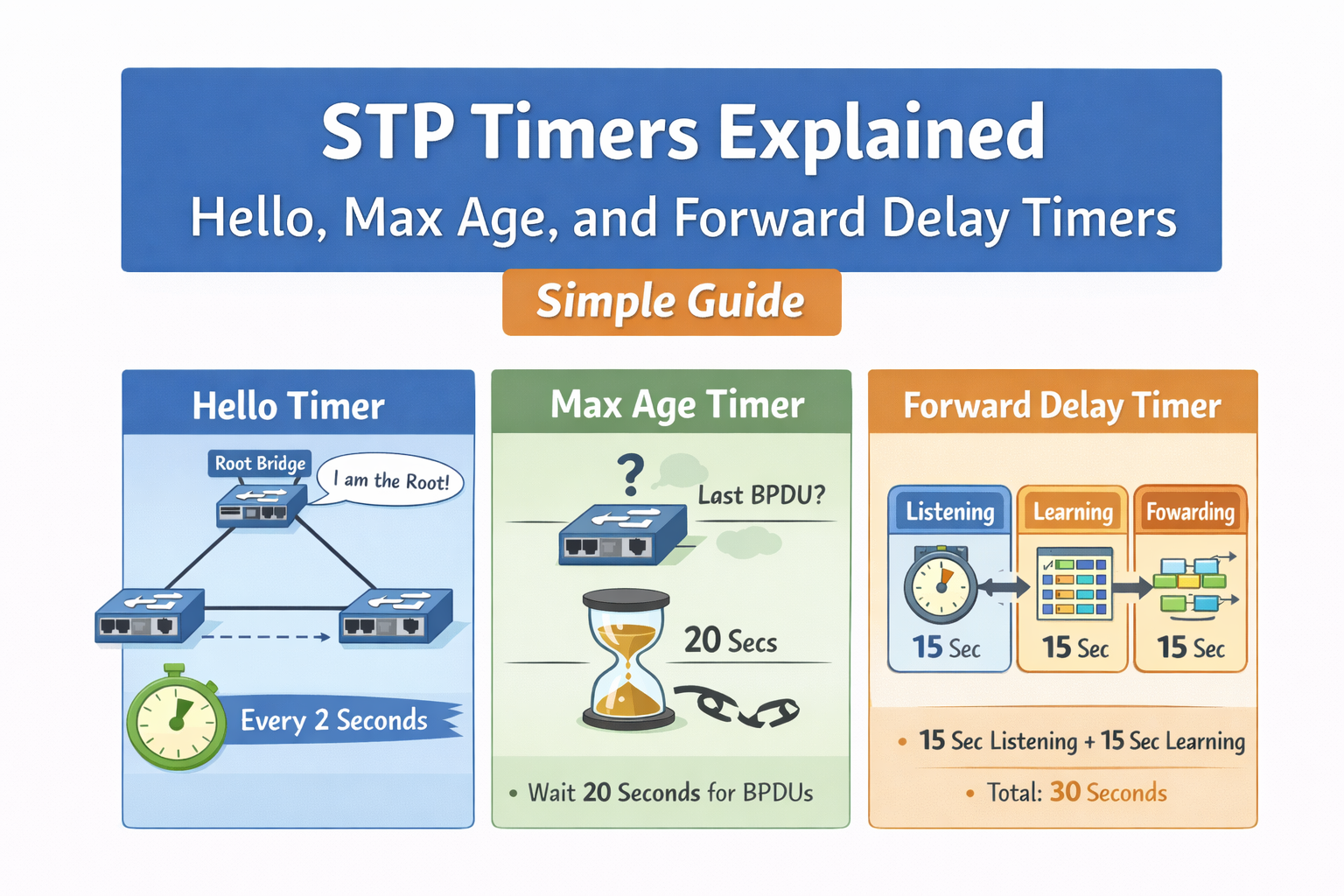
stp timers

In Ethernet networks, loops are dangerous. A loop can bring down the entire network by causing broadcast storms and MAC table instability. To prevent this, switches use Spanning Tree Protocol (STP). STP does not work randomly. It relies heavily on timers to decide when to send messages, how long to wait, and when to change … Read more
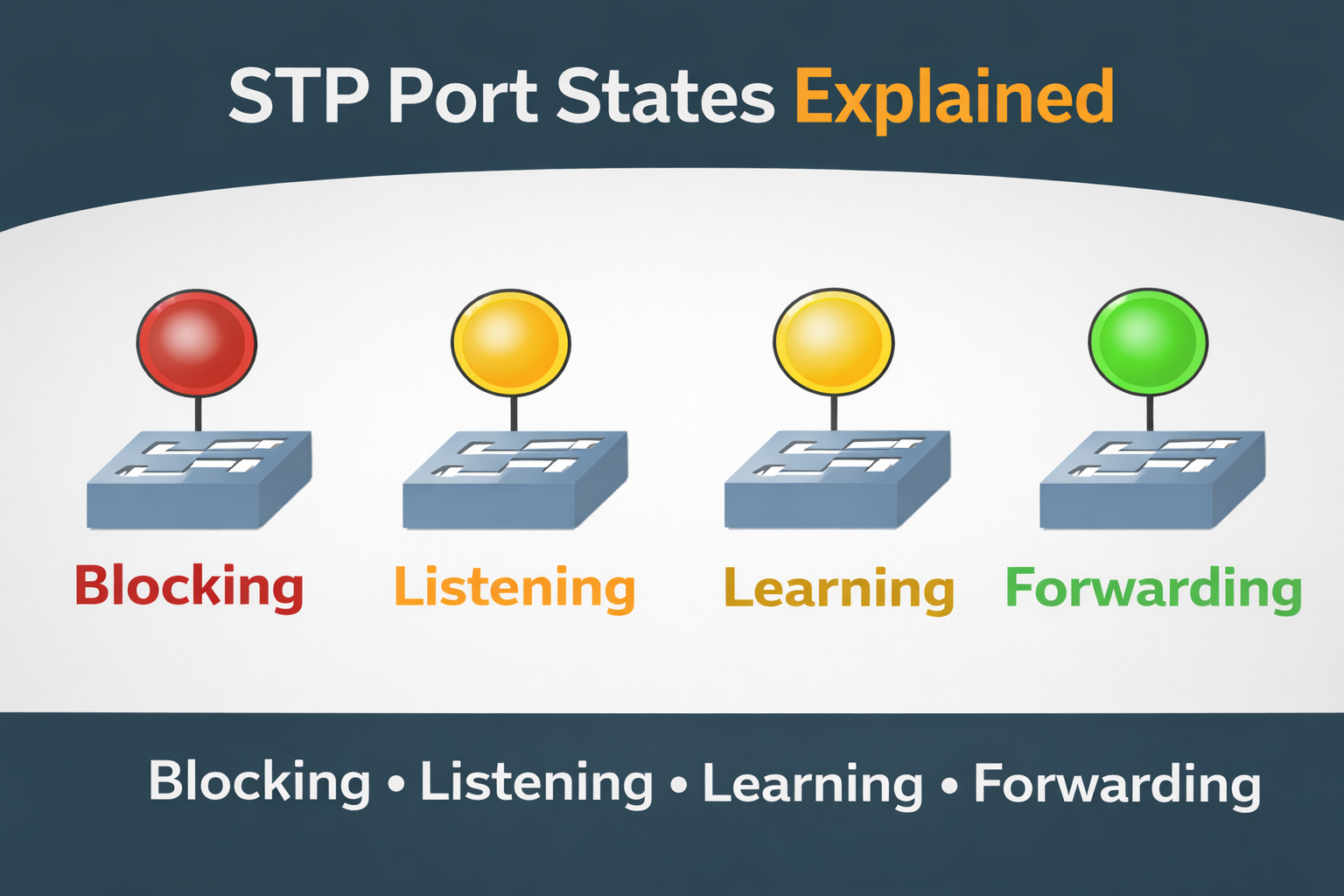
Spanning Tree Protocol (STP) Port States Explained in Simple Terms

stp port states

When people first learn Spanning Tree Protocol (STP), they usually focus on concepts like Root Bridge, Root Port, and Designated Port. However, many network issues related to STP are actually caused by misunderstanding STP port states. STP port states define how and when a switch port is allowed to forward traffic.These states are the reason … Read more

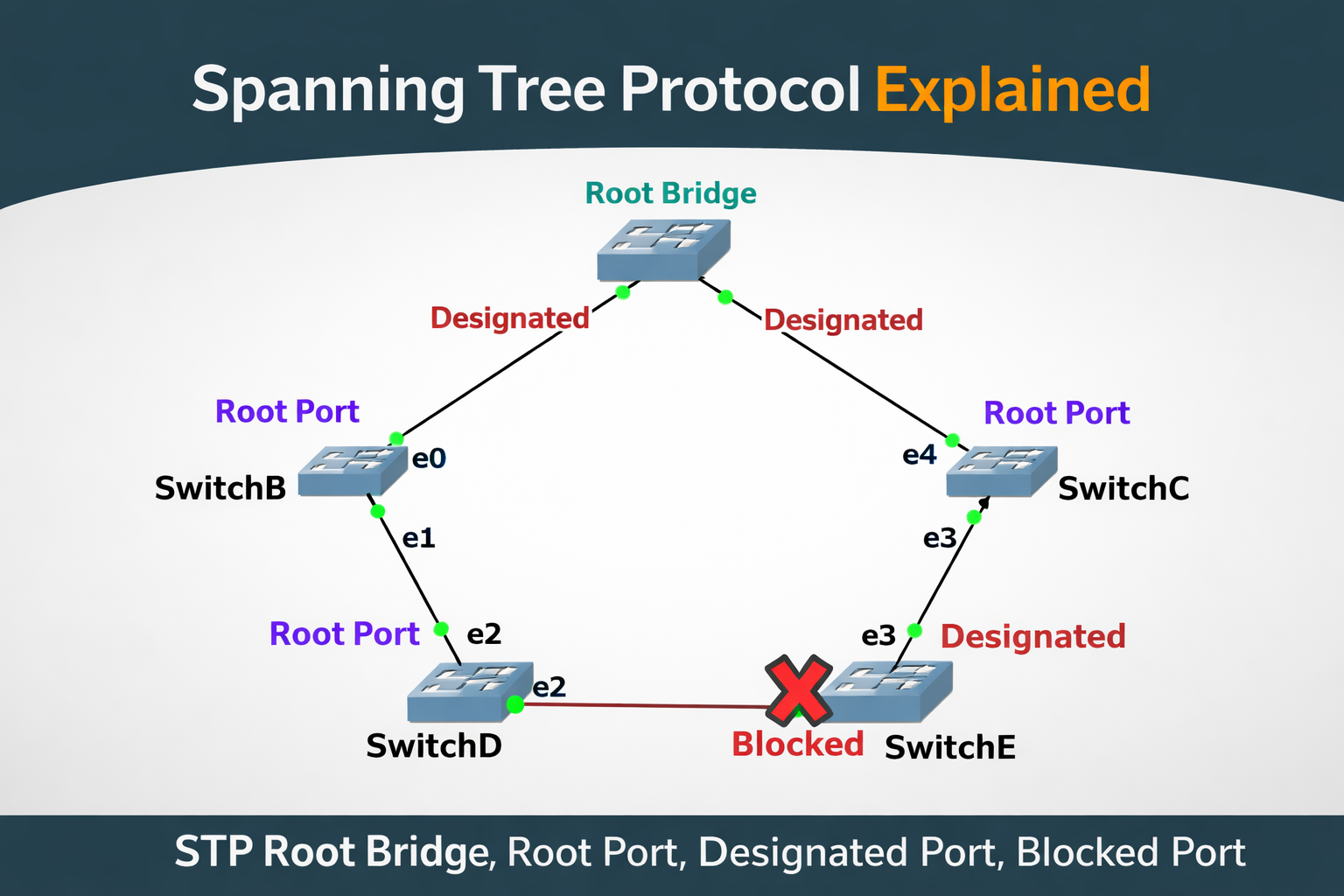
Spanning Tree Protocol (STP) Explained – How Switching Loops Are Prevented

stp

Switching Loops – When Redundancy Turns Dangerous In a switching network, redundancy is very common. We connect switches using multiple links so that if one link fails, traffic can still flow through another path. On paper, this looks like a strong and reliable design. However, at Layer 2, redundancy comes with a serious risk known … Read more